Kamareen
( 2020 | Copper sheets and neon tubes )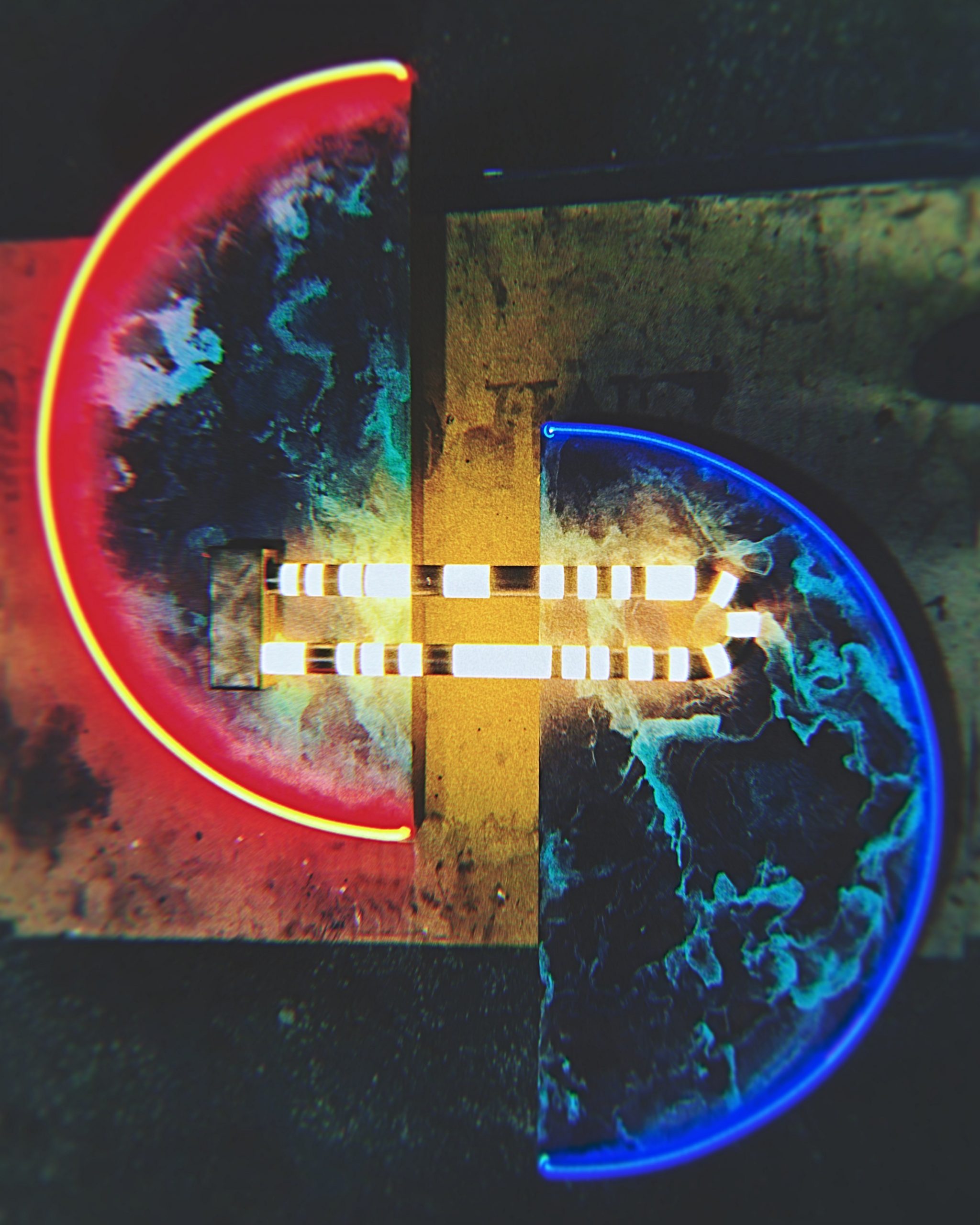
The title of this art piece is “Kamareen”, the dual form of the Arabic word moon. Two semicircles – the two moons represent the duality that the artist sees in every aspect of life. Our beliefs make our reality. With destruction comes new form, new meaning and new life. The offset copper sheets re connected through a bent neon tube that is segmented by black stripes. The separation being clear but filled with the essence of light. The dual aspect seems shifted out vertically. Both are part of a whole Light is the union, the viewer has to follow the rhythmic order of the shining light segments and black stripes closely in order to decypher the Morse code that is embedded into this work. The code is the key to reveal the secret message this work conveys.
This piece consists of two thick copper sheets with neon tubes framing the round curve of its edges. The original art work (left) was damaged by the explosion and gave Essayan the idea of creating a new surface, thus adding a new meaning to it. He gave the surface a marble looking appearaper by using heat, cold and oxidation – referring to the trimmed surface of the port that was wiped out by the blast. It is also a creative process that forms a new surface generating new associations and meanings. The new finish reminds us of a sattelite picture of the Earth, resembling the formations on the water surface.
NoSignal
( 2019 | Colored Plexiglass Installation )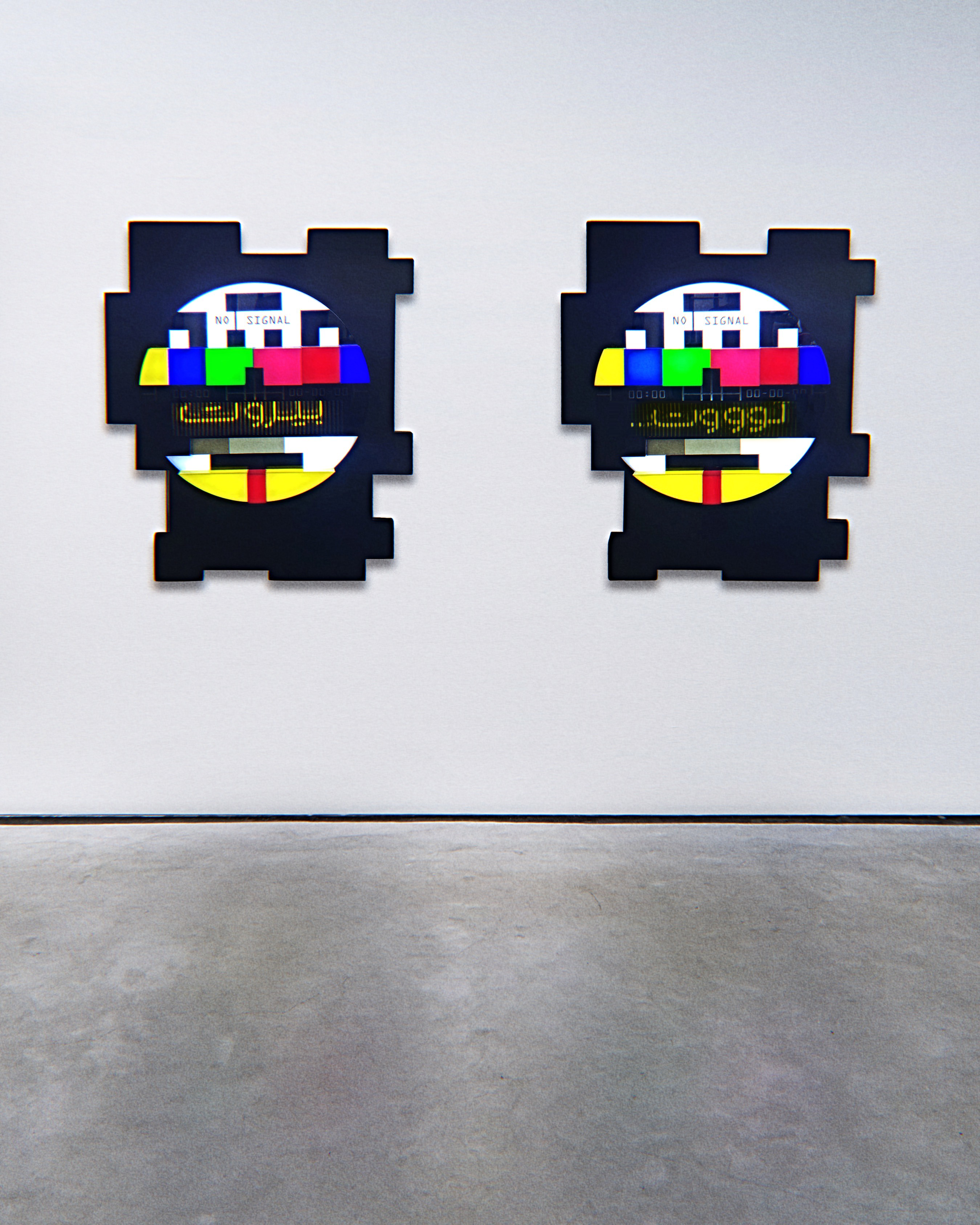
Inspired by the song ‘Toot toot ‘a Beirut’ this piece
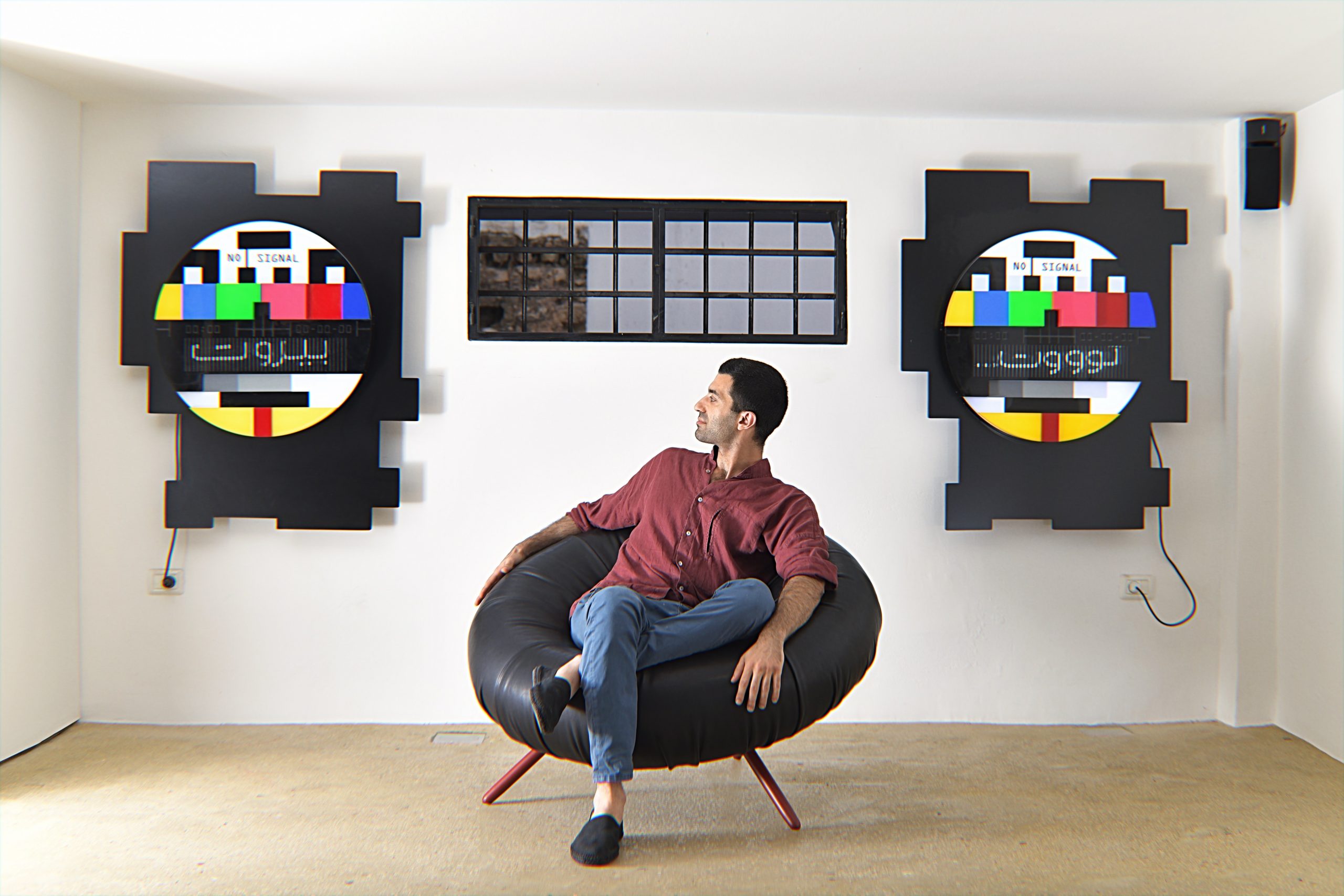
is representing the contrasting sides of the artist’s hometown. The title deliberately evokes the sound of a car horn suggesting a fun ride through the colourful city of Beirut which is underscored by the coloured surface of the perspex. By taking a closer look, the arrangement of two round shaped mixed media compositions appear to be TV test signals repeatedly flashing the words “Toot” and “Beirut”.
Consequently, the sound of the car horn turns into a static monotonous signal that sounds endlessly: cars stuck in traffic! As if staring at a television screen, the viewer is captivated by this colourful and bizarre image. The artist puts us into a state of rigidity simultaneously reminding us of its context, as the background of the piece looks familiar too: a typical Beiruti sidewalk pavement providing a physical reference to the location of the halt. Also, hinting at an Arabic proverb ‘toot ‘aleyk’, the artist is giving a satirical comment on the disfunction of the daily life in Lebanon.
Beirut in Silence
( 2020 | video performance, music composition and a grand piano out of rubble )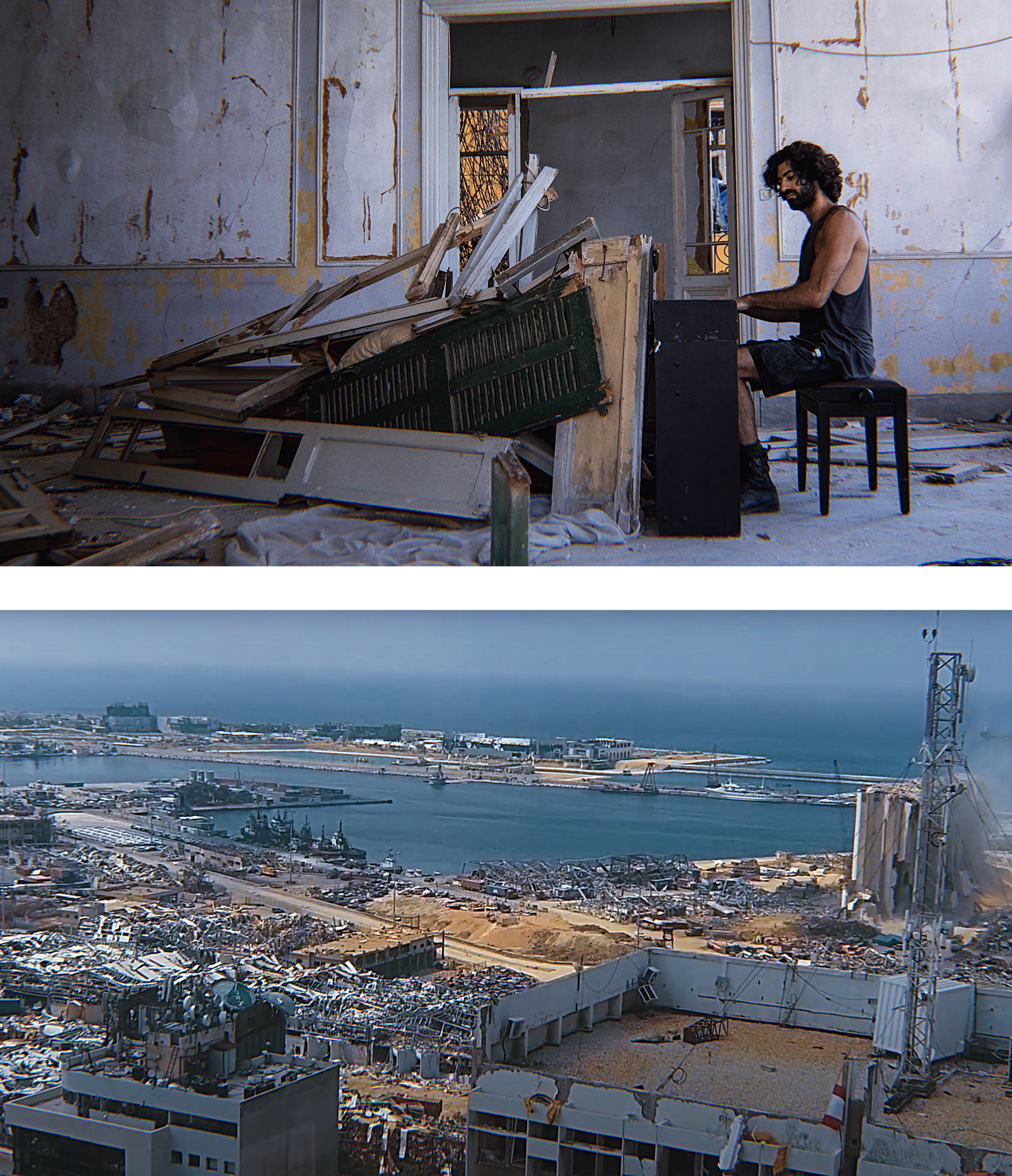
The blast in Beirut’s harbor in 2020 has given his life purpose. Having experienced the blast at close range, he dealt with the event through an archival assembly of its residue. Collecting scrap materials of wood and metal and giving it an overlay of sound, light and poetry. ARTE followed Essayan and together they made the reportage “Beirut in Silence”. Having been injured by the blast, he felt the importance of sharing through his own experience. Showing the world, the tremendous impact the blast is still having on its local community.
View the Arte documentary
View the performance
Untitled
( 2020 | Neon tubes, vinyl, plexiglass )
His upbringing in a country facing heavy social and environmental problems shaped and encouraged the artist to a call for action. By creating artworks he aims to carry out a message to wider public. Coming from a family of industrialists specialized in signage and lighting, enabled him to work in his family’s factory. He started to collect the companies waste products and turn them into art pieces. Showing the materials potential when we place a new gaze onto it.
M for Magnanumous
( 2020 | Neon tubes, blacklight, vinyl and painted plexiglass )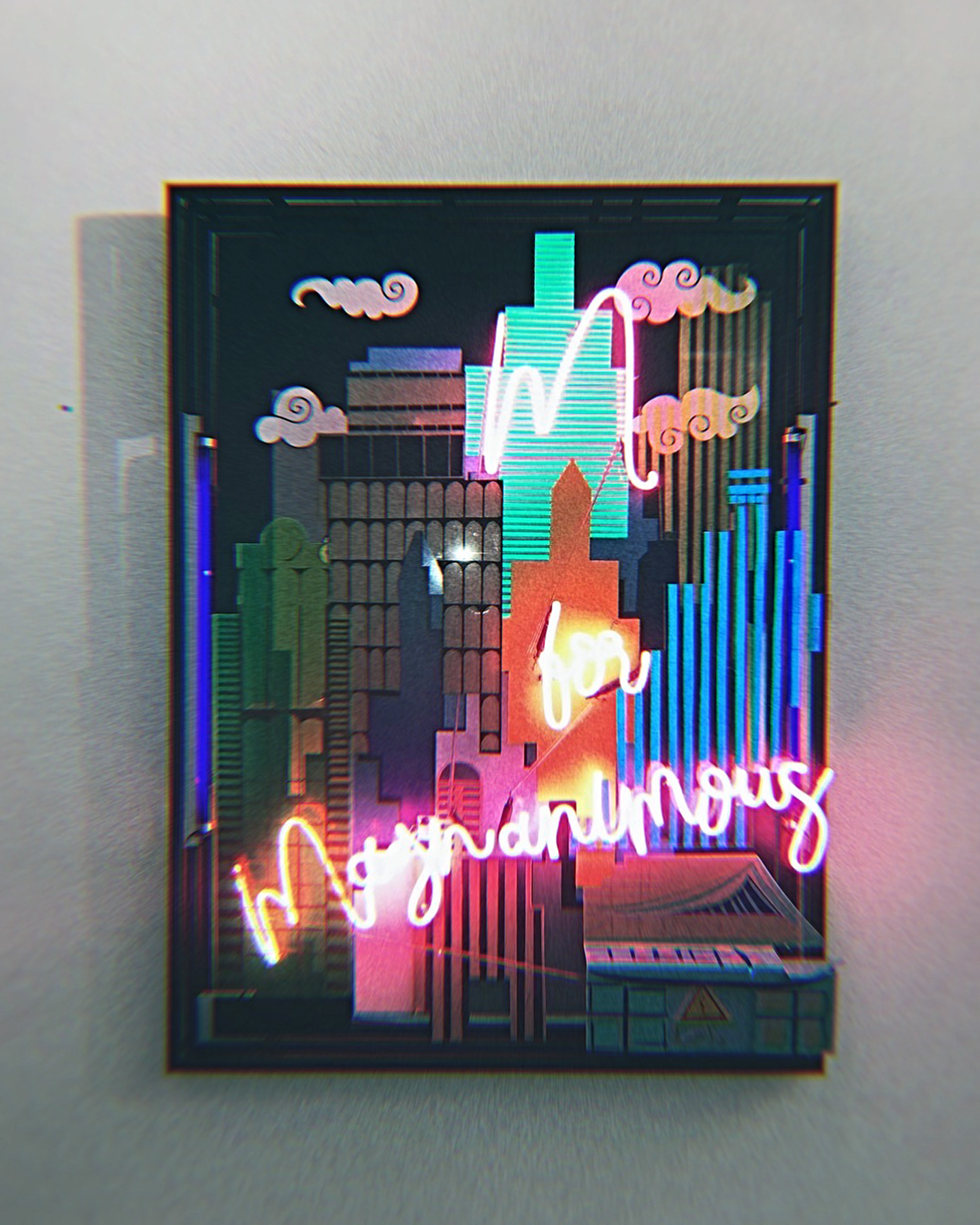
Private commission
Neon-Liths
( 2019 | Neon tubes, resin, HPL, stainless steel )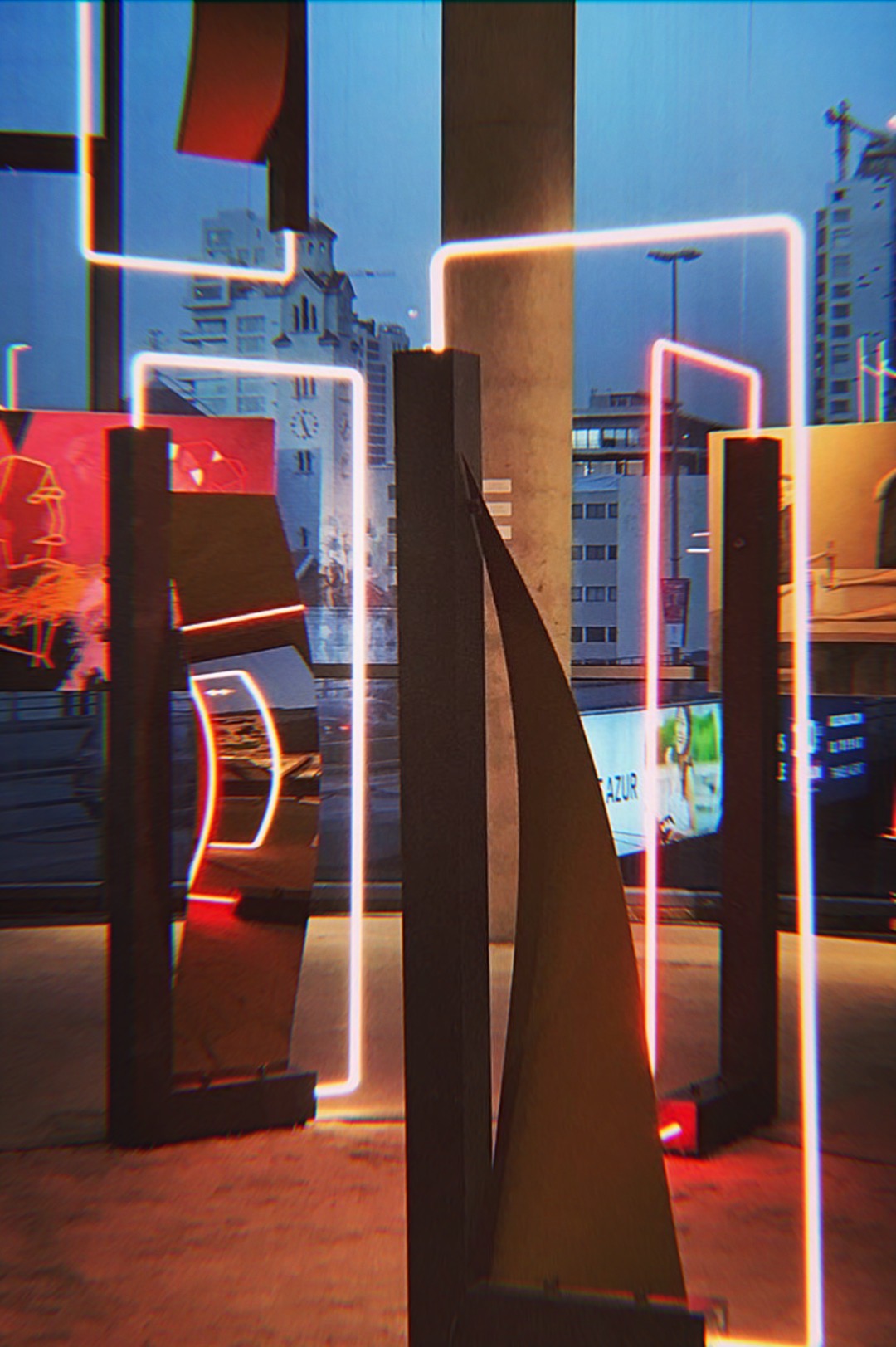
Dystopias are characterised by post-apocalyptic conditions that create damaged people and distorted visions. In Essayan`s context it is a distortion his country has created over the years: corruption, sectarianism, state bankruptcy and recently a massive chemical explosion at Beirut`s port.
The neon-installations the artist calls Neon-Liths (referring to pre-historic megaliths such as Stonehenge) remind us of distorted space-time portals which –according to ancient astronaut theorists— were built to make contact with extra-terrestrial civilisations. What would extra- terrestrial beings witness if they looked through one of these Neon-portals? How can an artist provide a visual perspective to depict his reality?